Benefits of Sleep Apnea Dental Devices
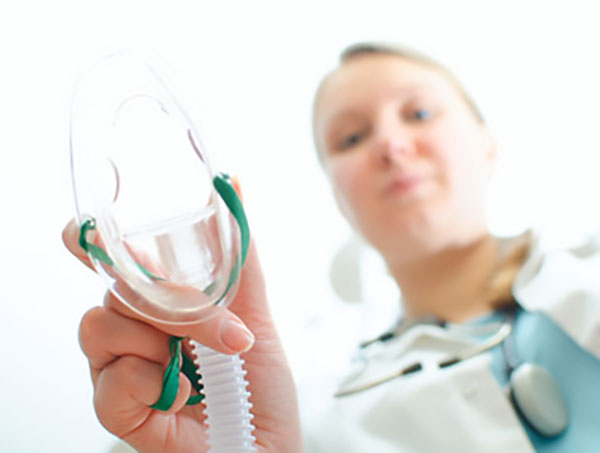
A continuous positive airway pressure (CPAP) machine is one of the most common ways of treating sleep apnea. However, for some patients, this is not an option. Perhaps you do not like the idea of a noisy machine running all night. Or perhaps the feeling of the machine bothers you during the night. Whatever your reasons, there are several alternatives. One of these is sleep apnea dental devices.
How sleep apnea dental devices work
There are two main types of sleep apnea dental devices. A mandibular, or lower jaw, advancing device works to bring the lower jaw forward. A tongue retaining device can hold the tongue so that it does not fall back and obstruct the airway while the patient is sleeping. Some devices will do both of these at the same time. A sleep apnea device is usually custom-made and fitted to the patient’s mouth by a dentist. This helps the device to be as effective as possible.
A dental device can be very effective for patients who have mild to moderate obstructive sleep apnea. These appliances can work very well for patients who sleep on their stomachs or backs. These devices can help to improve these patients’ sleep and reduce the amount of snoring. Some individuals are more likely to use dental devices more often than CPAP.
Benefits of dental devices
One surgical procedure for sleep apnea is uvulopalatopharyngoplasty (UPPP). In this procedure, the surgeon will remove the excess soft tissue from the patient’s throat. However, dental devices can work as well as this.
One of the main benefits of a sleep apnea dental device is that it is a good option for patients who spend much of their time traveling. A CPAP machine can be difficult to transport. In addition, in areas without electricity, the machine will not work. For patients who share a room with a partner, the machine can be noisy for the partner.
An oral device can be more cost-effective than a CPAP machine. Sometimes, oral appliances are covered by insurance. This is even more true for patients who have already had CPAP machines covered under insurance.
However, CPAP machines are still necessary. Some patients require a high pressure of CPAP therapy. For these patients, a dentist can create an oral device to use with the machine. For other patients, using an oral device can increase the comfort of the CPAP therapy greatly. When the device is used to keep the tongue or jaw from closing the airway, the CPAP pressure does not need to be quite as high. When the pressure is lower, the patient can experience a much higher level of comfort during use.
Visit a dentist today
It is important for you to have your sleep apnea treated. A dentist can fit you for a dental device to control this condition. The benefits of it include its portability and increased comfort. It can also be used with a CPAP machine.
Request an appointment here: https://www.stgeorgedentalcare.com or call St. George Dental Care at (435) 628-9099 for an appointment in our St George office.
Check out what others are saying about our services on Yelp: Read our Yelp reviews.
Recent Posts
Getting a dental implant is a significant step toward restoring your smile, and how you care for it in the weeks that follow plays a big role in how well it heals. The good news is that implant aftercare is fairly straightforward once you know what to expect.This guide walks through the healing timeline, how…
Waking up with a sore jaw or a dull headache isn't always about a bad night's sleep. For a lot of people, it's a sign of nighttime teeth grinding, a habit called bruxism that often happens without you ever realizing it.This article covers the common signs of nighttime grinding, why it matters if left untreated,…
"Implants last forever" is a phrase that gets thrown around a lot, and it's not quite accurate. Dental implants are one of the most durable tooth replacement options available, but calling them permanent oversimplifies what actually determines how long they hold up.This article looks at realistic implant lifespan, what factors affect longevity, and what that…
Spotting a small bump on your gum can be startling, especially if it appeared seemingly overnight. Most people search for answers right away, and understandably so. A gum boil looks unusual, but it's a fairly common dental issue with clear causes and a straightforward path to treatment.This guide covers what a gum boil actually is,…